- Subject
- Nutrition
- Filed
- Source
- James Martinez
- Loans
- 302
Winter Running Strategies for Safer, More Consistent Training
A coach who trained through Alaskan winters shares practical ways to manage slippery routes, cold weather and motivation while keeping training flexible.
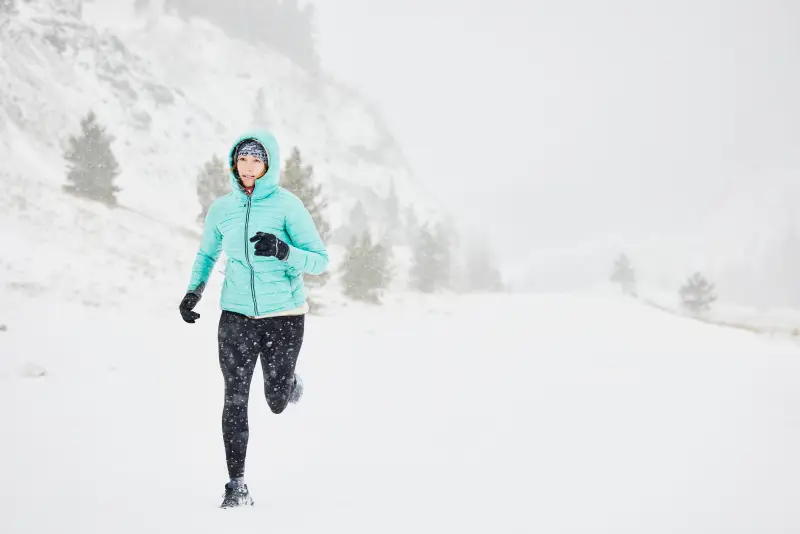
Winter training can support long-term running progress, but the conditions may call for changes to footwear, clothing, pace and workout location. Michelle Baxter spent 15 years running through Anchorage winters, where snow and ice could linger on neighborhood roads for months. The RRCA- and V.02-certified coach says the most useful approach was to make running manageable and consistent, rather than expecting every session to look the same.

During those years, Baxter trained for 12 marathons. After eight years of trying to break three hours, she ran 2:58:24 at the California International Marathon in December 2021, following a 3:01:14 at Anchorage’s Humpy’s Marathon in August of that year. She has since improved her personal best to 2:56:57 at the Indianapolis Monumental Marathon. Those results came over multiple training cycles, not from one winter alone.
Her experience offers a practical lesson for runners facing dark mornings, cold temperatures or slick paths: protect comfort and footing, keep the purpose of each workout in view, and adapt the plan to conditions.
Choose footwear for the surface
In Anchorage, Baxter’s biggest challenge was finding secure footing. She initially doubted that studded shoes would make much difference. Trying them changed her mind: the added traction helped her feel steadier on slippery ground.
For packed snow, she often used ordinary running shoes fitted with screws in the outsoles. On sheer ice, she preferred shoes with built-in carbide studs, including footwear from Icebug. She says the studs gave her confidence to turn on ice without feeling that each step might slide.
Conditions vary from route to route, so the relevant question is how much of a run is likely to be snowy or icy. Now living in Minnesota, Baxter says she reaches for studded shoes when she expects at least half the route to include potentially slick ground. They may feel less comfortable than her usual trainers, but reliable traction can help reduce the chance of a fall.
For runners who encounter only occasional patches of ice, the same principle applies: match the shoe or traction option to the surface they regularly run on. Footwear choices should make it easier to move with control, not encourage a runner to maintain a pace that the conditions don’t support.
Layer for movement, wind and visibility
One common mistake Baxter sees is wearing too many layers. A runner may feel cold before heading outside and bundle up heavily, then become uncomfortably warm once moving. Her rule of thumb is to begin a little chilly; after roughly 10 minutes of running, the body should warm up.
Wind matters alongside the air temperature. Baxter generally recommends considering the wind chill when choosing layers. She recalls a particularly windy Alaska run when she dressed for the air temperature and became dangerously chilled. That experience taught her to account for how exposed a route will feel, rather than relying on the temperature reading alone.
Use each run to learn what works. If you stay cold after warming up, you may need another layer next time. If you become sweaty or uncomfortable, try less insulation or a different combination. Baxter found that multiple pairs of tights kept her legs warm near subzero temperatures but restricted her movement. A thick, fleece-lined pair of running tights worked better for her in temperatures from about 15 degrees down to minus 10 degrees Fahrenheit.
She also simplified her upper-body setup. Instead of combining a base layer, fleece layer and wind layer, she found a warm jacket that worked over a base layer. The right arrangement depends on the runner, the route and the weather, so comfort during movement is a more useful guide than the number of garments.
Cold hands and wet feet can also make a run difficult. Baxter suggests hand warmers inside gloves, running-specific wool socks and waterproof shoes as options to consider. For dark winter conditions, she wears a lighted vest. She started treating it as essential after noticing, from a driver’s perspective, that blinking lights made runners easier to see than reflective clothing alone.
Build a reason to get out the door
Even suitable gear doesn’t remove the challenge of leaving a warm home on a cold, dark morning. Anchorage has less than six hours of daylight during the darkest part of winter, and typical winter high temperatures hover around 25 degrees Fahrenheit. Baxter’s own solution was to make running part of her routine: she got up and ran because that was how she began the day.
A daily habit is only one possible source of motivation. A future race, a training partner or a schedule that makes it satisfying to complete planned sessions may help other runners. Baxter says it also helped to remember that winter running could build a base for later training. Easy mileage and some workouts, she says, can pay off in a future race cycle.
That goal doesn’t have to mean maintaining a demanding plan throughout the coldest months. If winter makes the usual workload impractical, a simpler maintenance routine may help preserve continuity until conditions or schedules change. The useful target is the amount of training a person can sustain safely, not a particular pace or volume.
A major event several months away may still feel too distant to motivate a run today. Baxter suggests adding a nearer-term reason to take part, such as a low-pressure winter race or holiday run with friends. A small checkpoint can give the season some shape without turning every workout into a test.
Use people and places to support the plan
After moving to Anchorage, Baxter joined a training group that met for workouts at The Dome, an indoor athletic facility with a track. It helped her connect with other runners and gave her a regular weekly session. As friendships developed, knowing that other people expected her to attend made it easier to show up.
A local running club or training group can provide a similar structure. A standing workout gives the week a regular point of connection, and company may make a challenging session feel more approachable. Runners can also look for indoor tracks or treadmills when outdoor conditions don’t suit the workout.
Baxter generally kept the planned workout but changed where she did it. After substantial snowfall, she sometimes used a treadmill instead of trying to move through fresh snow. For faster sessions, she often chose an indoor track or treadmill where she felt more comfortable running hard. Easy and long runs were usually outdoors.
This distinction keeps the workout’s purpose in focus. If a speed session falls on a day when the route is slippery, an indoor setting may offer a more controlled surface. For an easy outdoor run, slowing down when snow or ice makes the usual pace unrealistic is a sensible adjustment.
Keep winter in perspective
Baxter’s marathon progress took years of training and repeated cycles. Her experience suggests that consistency can matter more than making every winter run impressive. Conditions change, and the plan can change with them; useful training may mean building fitness outdoors, completing a focused workout indoors, or choosing a lighter routine for a period.
For runners managing persistent cold, ice or uncertainty about clothing and traction, a gradual, flexible approach can help make training more comfortable. Baxter describes endurance running as a long-term effort built through years of accumulated work. A winter season is one part of that process, and a safe, sustainable routine can leave room for the next one.


