- Subject
- Fitness & Workout
- Filed
- Source
- Richard Garcia
- Loans
- 428
At 60, a First-Time Marathoner Shares Five Lessons From Training for New York
After limited preparation and medical advice, a 60-year-old completed the New York City Marathon. His experience offers lessons in pacing, support and realistic goals.
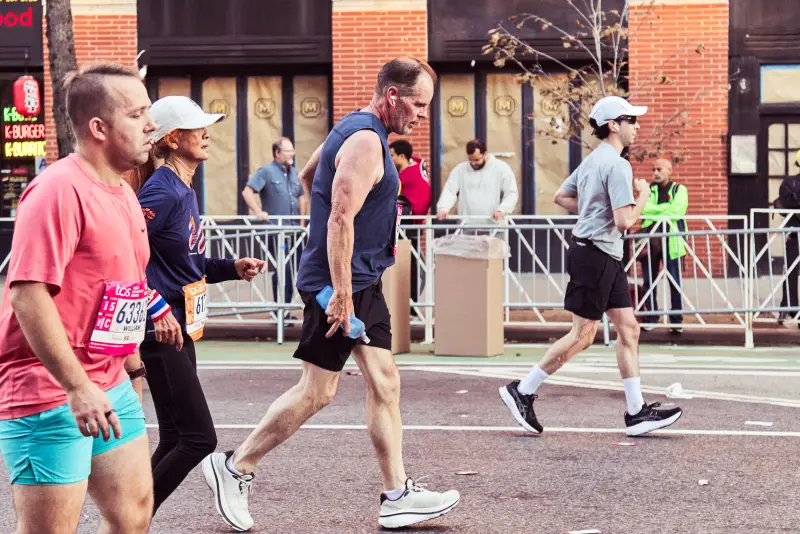
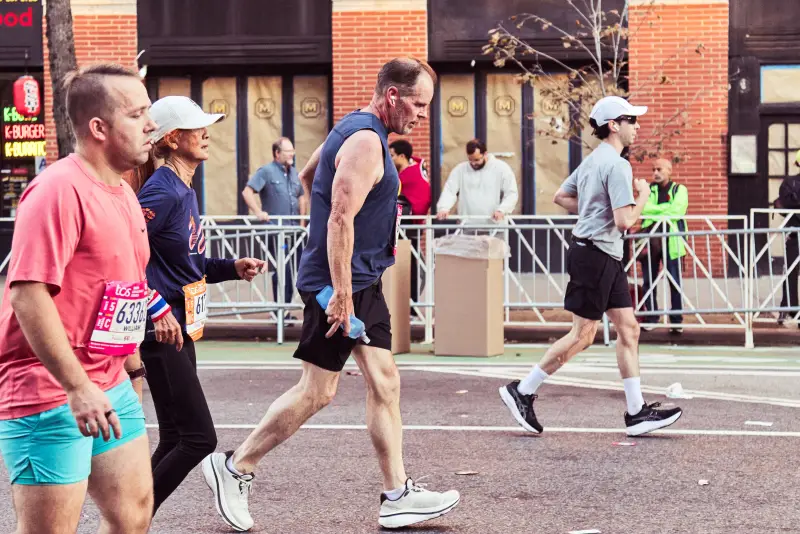
Finishing a marathon at 60 after barely being able to run 1.5 miles is an encouraging personal achievement. It isn’t evidence that a marathon is safe or realistic for every beginner, especially someone with a known heart or blood vessel condition. The runner’s experience points to the value of gradual training, medical guidance and adjusting expectations when preparation falls short.

Before the year he ran the New York City Marathon, he had little running experience. His previous outing was an unprepared 5K with his daughter about a decade earlier. In May, roughly two months before his 60th birthday, he entered another local 5K partly to prove to himself he could do it. A few practice runs didn’t take him much beyond 1.5 miles, and he walked many of the hills on race day. He finished in 35 minutes, 16 seconds, at an average pace of 11 minutes, 20 seconds per mile.
Several months later, colleagues encouraged him to take on the New York City Marathon. He was unsure he could cover the distance but accepted the opportunity. His account of what followed offers a candid look at what helped him reach the finish, as well as the limits of his preparation.
Training around a health concern
He began following a six-month beginner-to-marathon training plan, skipping ahead because he had already built up to five miles. Around early August, he started running three evenings a week on local trails, usually covering three to five miles at an easy effort. He added hills to many runs to prepare his leg muscles for New York’s climbs.
But he missed many longer runs and felt anxious about falling behind the plan. A significant reason for his hesitation was a health concern: doctors had told him a couple of years earlier that he had an enlarged aorta. He said his physician linked it to his physically demanding years as an ironworker. An enlarged aorta can raise concern about a potentially serious complication, so the possibility weighed on him as he trained.
He arranged an appointment with his cardiologist, though the visit was rescheduled for the last week of October and imaging could not take place until November. After he discussed his marathon training with a nurse practitioner, his doctor gave him the go-ahead to keep running cautiously. He continued because he had no symptoms or immediate concerns.
That decision belonged to his care team and his circumstances. Anyone with a known heart or blood vessel condition who is considering strenuous exercise can discuss the activity and training plan with a clinician familiar with their health history. Symptoms during exercise or a change in how someone feels also warrant timely medical advice. A personal account cannot establish that the same training approach is appropriate for someone else.
What he managed to fit into training
As race day approached, he completed a 15-mile long run, which he described as the minimum long-run distance coaches recommend during marathon preparation. He felt strong throughout and fueled during the run, which reassured him. That experience helped, but one long run doesn’t erase the uncertainty created by missed training or establish that a runner is fully prepared for 26.2 miles.
Early in the plan, he also tried several threshold interval workouts. One included eight repetitions of one-minute hard efforts with a minute of recovery between them, bookended by a two-mile warmup and cooldown, plus short strides before the workout. He found the session harder than expected. Later in training, he noticed his pace improving and began to consider whether he might finish in under five hours.
He kept up a simple strength routine three or four times a week using a 35-pound kettlebell. It usually involved 20 to 50 swings, 10 weighted goblet squats and 10 push-ups. At least once a week, he added two or three sets of five to 10 minutes of continuous jump rope between some strength sets. He believed this work helped him feel strong and durable. Those details describe his own routine; they aren’t a prescription for other runners, and new strength or jump-rope work may need to be adapted to a person’s fitness and health.
A finish built around adjusting expectations
On race morning, he traveled from Princeton, New Jersey, and ate three of the six large pancakes he had prepared, saving the rest for the bus ride to the start. He carried 12 energy gels and a 17-ounce handheld bottle of electrolyte mix, then set out at an easy effort. For much of the distance, he felt he could have breathed through his nose if he wanted to.
At the start, he felt out of place, wondering whether he belonged in a marathon. He described this as a familiar form of self-doubt from earlier parts of his career. His way through it was to take the first step and keep moving. The crowds, the city streets and the sight of buildings he had worked on helped sustain him. He didn’t turn on music; he preferred the sound of spectators cheering.
After halfway, he recognized that finishing under five hours was no longer realistic and shifted his focus to completing the course. His family was watching around mile 17. The support helped him through, although miles 19 and 20 were difficult. He crossed the line in 5 hours, 18 minutes and 56 seconds, where colleagues were waiting with his medal.
Five lessons he took from the experience
1. Let other runners lift your spirits
He had felt encouraged by other participants during the 5K, and he found the same effect late in the marathon. Around miles 18 or 19, he noticed a runner wearing a sign that said she was 22 weeks pregnant. Seeing her became a source of motivation. The lesson is less about comparing effort than about noticing how other people can help someone stay engaged when the miles become difficult.
2. Make room for support
His family made “Team Smith” shirts, and friends and relatives came to watch. His son joined by video call from Paris. The brief sight of family at mile 17 helped carry him through the remaining nine miles. Spectators can offer a useful emotional lift, but support is personal: some runners may prefer company, while others find a quieter approach works better.
3. Break a demanding goal into smaller parts
He compared the effort to driving at night, when headlights reveal only a short stretch of road. Rather than dwell on the full distance, he told himself he could continue for another two miles. That narrower focus helped him make progress to mile 23. For a long effort, manageable near-term goals can make the task feel less overwhelming, while still leaving room to slow down or stop if needed.
4. Draw on past setbacks, without treating grit as a training plan
He remembered earlier moments when people doubted his career plans. After film school in Ithaca, New York, in 1988, he spent time in Los Angeles and then returned to New Jersey. He said he sold four scripts despite being told he wouldn’t succeed from there, and later got a movie made. He drew on that history, and on his wish to set an example for his three adult children, when the marathon became tough.
Persistence mattered to him, but determination alone can’t replace preparation or medical judgment. For a first-time runner, being willing to change the goal is part of making a careful decision, not a sign of failure.
5. Treat mistakes as part of learning
He described learning practical skills at work by trying, getting something wrong and making another attempt. He carried that view into the marathon: progress often includes setbacks, and a difficult experience can offer useful information. That perspective can help people approach a new challenge with less pressure to perform perfectly.
His finish shows what one person managed with an imperfect training block, a cautious conversation with his doctor, encouragement from others and a revised time goal. For anyone considering a long-distance event, the practical starting point is to build up thoughtfully, seek medical guidance when health history calls for it, and choose goals that leave room to adapt.