- Subject
- Nutrition
- Filed
- Source
- Thomas Williams
- Loans
- 323
Juli Windsor Runs 3:42 Marathon and Targets a Faster Boston Qualifying Time
At 39, Juli Windsor set a 3:42 marathon best and a provisional T40 record. She hopes her progress will help open more race opportunities.

Juli Windsor’s 3:42:00 marathon in Indianapolis shows how much her running has changed since she returned to the distance: she took seven minutes off her personal best and recorded a provisional American mark in the T40 para category for athletes with short stature. Now 39, she is working toward a faster time that would meet the qualifying standard for her age group at the Boston Marathon.
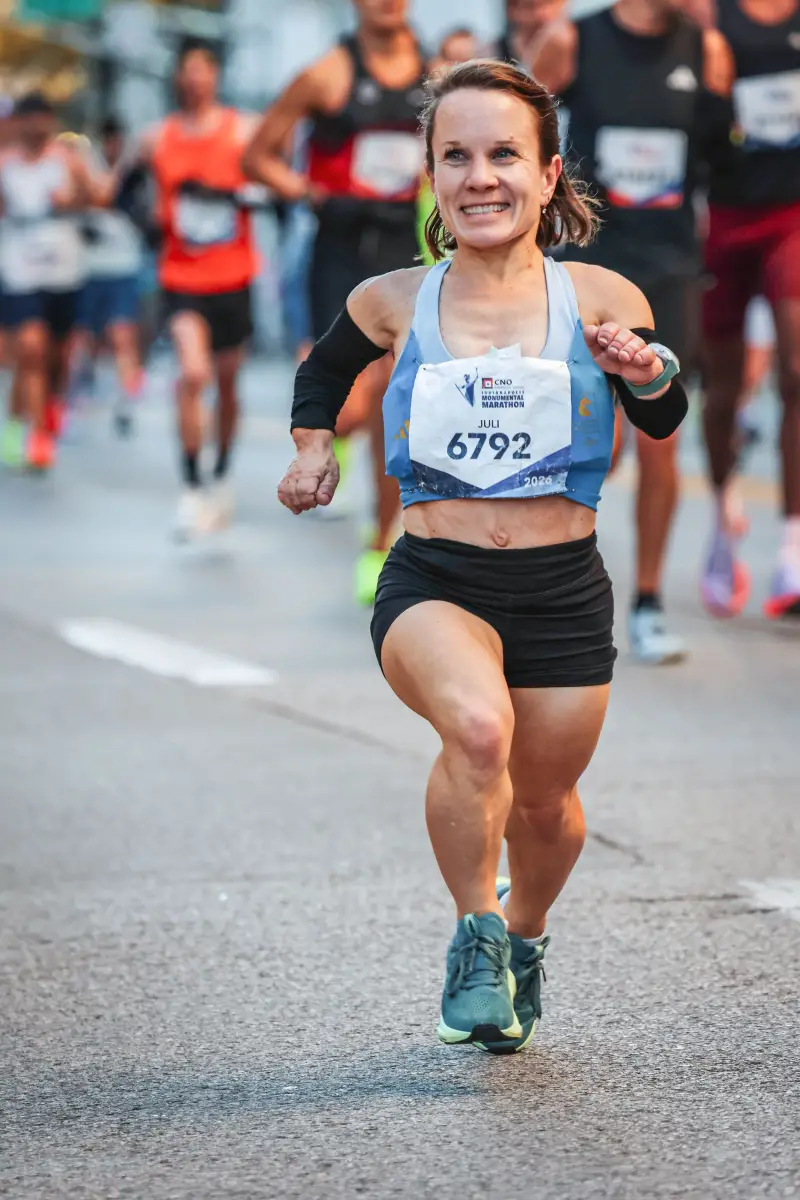
Windsor ran the Indianapolis Marathon on November 7 at an average pace of 8:28 per mile, placing in the top third of the 35–39 age group. Her time is listed as a provisional T40 record; that status makes it an early milestone in the record book, while the broader significance of the performance is clear in the seven-minute improvement. Indianapolis results and US para athletics records provide the race and category details.

Windsor was born with acromesomelic dysplasia, a rare form of dwarfism. She is about 3 feet 9 inches tall and works as a physician assistant in developmental pediatrics. She has described the condition as affecting roughly one person in a million, based on what she had heard. On crowded courses, she says, her view can be blocked by other runners, and other competitors may not readily see her.

A return to the marathon
Running first became part of Windsor’s life in middle school, when she joined a track team to spend time with friends. A win in an 800-meter race shifted her expectations. Sprinting wasn’t where she felt strongest, but she found she could sustain an effort and outlast competitors. That discovery eventually led her toward longer races and, in her twenties, the marathon.

Her first major goal was to become the first person with dwarfism to complete the Boston Marathon. In 2013, she had to stop near the finish after an incident disrupted the event. She was unharmed. The following year, she completed the course in 4:43:26, making history for runners with dwarfism. Then she stepped away from marathons for a decade to raise her two children and focus on family life.

Windsor returned to the distance in 2025 at the Spinx Marathon in Greenville, South Carolina, finishing in 4:09:51—more than 30 minutes faster than her Boston result. She later began working with coach Esther Atkins, a former professional marathoner who coaches with McKirdy Trained. Atkins believed Windsor had room to improve. Windsor was initially unsure, but ran 3:49:42 at the 2026 Boston Marathon, followed by the 3:42 in Indianapolis.

Atkins says Windsor is open to new approaches and willing to test what she thinks she can do. Windsor, in turn, values having a coach who sees potential in her while taking her individual challenges seriously. The partnership has accompanied a series of large personal bests, though the account doesn’t establish which particular training changes produced them.

Race conditions and equipment
Windsor’s body changes the mechanics and logistics of running. At Indianapolis, she averaged 207 steps per minute. A commonly cited cadence target is 180, but runners’ cadence varies, and the comparison alone doesn’t tell us which rhythm is best for an individual. Windsor’s shorter stride means she covers less ground with each step, so a high cadence is part of how she maintains her pace.

Course awareness matters, too. Because she can be difficult for nearby runners to spot, Windsor generally stays on the right side of the road to be more visible and reduce the chance of being tripped or surprising someone as she passes. At large events such as Boston and Indianapolis, she can start a few minutes before the main field, allowing the crowd to spread out. She describes the view from behind a dense pack as a practical drawback of her height, rather than a reason to give up the race.
Finding suitable gear takes extra work. Windsor wears a children’s size 13, but athletic shoes in that size can be difficult to find, and many options lack features common in adult running shoes. She generally chooses a size 1 and uses custom orthotics. She has liked Asics shoes, including the GT-2000 she wore in Indianapolis, but says the range of technology available in such small sizes remains limited. Super shoes in her size aren’t available.
A GPS watch that fit her wrist was another obstacle until she found a 42-millimeter Garmin model last summer. It let her run without carrying a phone and track measures such as cadence and stride length. Windsor credits access to those data with contributing in part to her recent progress. Data can help a runner understand patterns, but it doesn’t by itself explain why a performance improves.
Goals beyond one finishing time
Windsor’s next performance target is the age-group qualifying time for Boston. She has already earned a qualifying time in the adaptive athlete field, but is aiming for the standard for runners in her age group. Turning 40 next spring will move her into the 40–44 bracket, where the time she is targeting is under 3:35:00—about seven minutes faster than her current best.
She also wants more chances for runners in the T40 category to take part in organized racing. World Para Athletics does not currently sanction running events in the short-stature division, while USATF has recently added the marathon to its T40 category. Windsor says her motivation is less about holding a record than establishing a mark other athletes can challenge and making it easier for others to try the event.
Her next listed race is the Tokyo Marathon on March 7, one week before her 40th birthday. The result will be another opportunity to see how far her marathon has progressed—and whether her experience helps make the path more visible for other runners with short stature.


