- Subject
- Nutrition
- Filed
- Source
- Michael Garcia
- Loans
- 442
Turmeric and Brain Health: What Curcumin Research Shows So Far
Curcumin may affect processes tied to brain health, but human evidence is limited and doesn’t establish turmeric as a way to prevent cognitive decline.

Turmeric’s curcumin is being studied for effects on brain health, but the evidence is at different stages. Laboratory and animal research points to possible effects on inflammation, oxidative stress and brain-cell activity. A 2025 analysis of nine randomized trials, involving 501 people, also found improved overall cognitive scores among participants taking curcumin compared with those taking a placebo. That result is encouraging, but it doesn’t show that turmeric prevents dementia or reliably improves memory for everyone.

Curcumin is a naturally occurring polyphenol in turmeric and the spice’s most studied active compound. It can influence several biological pathways involved in inflammation and oxidative stress. Those effects have prompted researchers to examine whether curcumin might also influence conditions in the brain that support learning, memory and the ability to adapt.
What researchers mean by neuroplasticity
Neuroplasticity is the brain’s capacity to change its activity and connections in response to learning and experience. It involves networks of neurons adjusting over time; it isn’t a single process that one food can switch on. Sleep, physical activity and mentally engaging experiences are among the broader factors associated with brain health. Nutrition is another area researchers study, though evidence about a particular compound needs to be considered separately from what is known about healthy routines in general.
Curcumin’s potential connection to neuroplasticity comes mainly from preclinical work. In cell and animal studies, researchers have investigated whether it can support the growth of neurons, including in the hippocampus, a brain region involved in learning and memory. Other studies have examined antioxidant activity, which could help limit damage to cells from unstable molecules, and effects on chemical signaling in the brain, including signaling involving dopamine.

Researchers have also studied curcumin’s possible effects on amyloid-beta and tau, proteins associated with Alzheimer’s disease. Findings about these proteins in laboratory or animal studies do not establish that curcumin treats or prevents Alzheimer’s in people. A biological effect observed in a model may not occur at the same level in the human brain, or lead to a meaningful change in daily thinking and memory.
What the human evidence can—and can’t—tell us
The 2025 meta-analysis pooled results from nine randomized controlled trials with a total of 501 participants. Across those trials, curcumin supplementation was associated with a statistically significant improvement in overall cognitive function compared with placebo. The reported effect appeared stronger in adults over 60 and in studies lasting at least 24 weeks.
That is a signal worth studying, not a settled answer. A meta-analysis can combine results from several trials, but its conclusions still depend on the quality and comparability of those studies. The available report here does not provide enough detail to assess the size of the cognitive benefit, the specific tests used, or whether participants noticed meaningful changes in everyday life. The total sample of 501 is also modest for drawing broad conclusions about long-term brain health.
Most of the proposed explanations—such as supporting neuron growth or changing the handling of proteins associated with cognitive decline—come from laboratory and animal research. The human trial findings don’t establish that these mechanisms caused the observed test-score changes. Nor do they show that adding turmeric to food will produce the same result as taking a studied curcumin supplement.
Turmeric in food and curcumin supplements
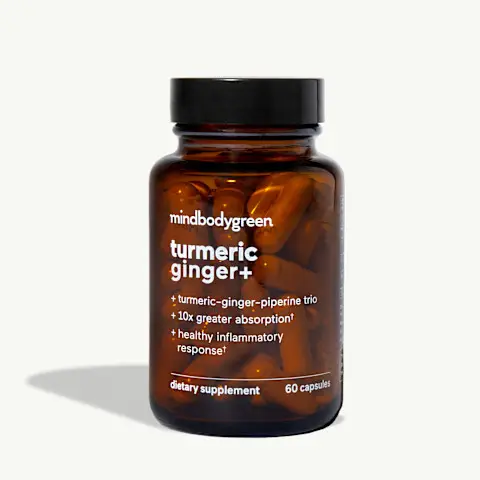
Turmeric can be used as a spice in meals, but the amount of curcumin people absorb from food varies. Curcumin is poorly absorbed on its own and is quickly processed and cleared by the body. Researchers have studied ways of increasing absorption, including combining curcumin with piperine, a compound found in black pepper, and using specialized formulations designed to improve solubility. Results for a particular formulation do not automatically apply to turmeric in cooking or to other supplements.
One source cited in the research discussion reports that eating half a teaspoon to one teaspoon of turmeric daily was linked with changes in inflammatory markers. That finding concerns those markers; it does not establish a daily amount for brain health or show that this intake improves cognition. Food studies and supplement trials may also use different preparations and measure different outcomes.
Anyone considering a curcumin supplement, particularly alongside medicines or treatment for a health condition, can ask a doctor or pharmacist whether it is appropriate. Product formulations differ, and evidence from one preparation may not apply to another. The current research supports further study of curcumin’s possible effects on cognition, while leaving open whether it can produce lasting, noticeable benefits in everyday life.
For now, turmeric is best understood as a familiar food ingredient with a compound under investigation—not as a proven way to preserve memory or prevent cognitive decline. Larger, longer human trials with clearly reported outcomes will help show whether the early findings translate into practical benefits.


