- Subject
- Fitness & Workout
- Filed
- Source
- Richard Williams
- Loans
- 761
Pelvic Floor Problems Can Affect Runners of Every Sex, and Symptoms May Be Treatable
Leaking, pain, or trouble emptying the bladder can have several pelvic floor causes. Recognizing the signs may help runners find appropriate care.

Urine leakage is only one way pelvic floor problems can affect running. Some runners struggle to empty their bladder, experience pelvic or hip pain, or find that symptoms appear only after a long effort. These problems can affect people of every sex, and the right care depends on how the pelvic floor is working—not simply whether it seems weak.

That distinction matters. Pelvic floor muscles need to contract and relax, coordinate with breathing and movement, and handle repeated impact. A problem in any of those jobs can interfere with running. Yet embarrassment, limited awareness, and the assumption that symptoms are just part of exercise can keep people from seeking help.
Research cited by pelvic health specialists estimates that about one in three women and one in six men will experience pelvic floor dysfunction during their lives. Those figures reflect reported cases, so they may not capture everyone affected. A small study found that about 46 percent of elite female endurance runners and cross-country skiers reported urine leakage when coughing or sneezing. That result describes a specific group and doesn’t establish how common leakage is among all runners.
Symptoms can look different from one runner to another
Liz B., a 36-year-old runner from central Ohio, began leaking urine during a run five months after giving birth. She had experienced pelvic organ prolapse after a difficult labor and was already seeing a pelvic floor therapist. Even after six weeks of gradually returning to running, she found that running faster could bring on leakage. At her slower pace, she was running around a 10:30 mile; when she went faster than a 9:00 mile, she sometimes leaked.
Before pregnancy, Liz had completed eight marathons and hoped to return to running with her child in a stroller. Her training had already been interrupted during pregnancy by peripheral blood clots and pain that required her to reduce activity. Her experience shows how a return to running can involve more than rebuilding cardiovascular fitness: pregnancy, childbirth, symptoms, and individual recovery can all shape what feels manageable.
Urinary leakage may be the symptom people most readily associate with pelvic floor problems, but it’s not the only one. Runners may seek care for difficulty urinating or passing stool, pelvic organ prolapse, fecal incontinence, or sharp, persistent, or nagging pelvic pain. Symptoms can also be felt in the lower back, hip, or deep hamstring area, and pelvic floor dysfunction may contribute to pain during bowel movements or sex.

Some runners avoid mentioning leakage because they fear they’ll be told to stop running. Others may assume that discomfort or bladder changes are inevitable, or may not know which clinician to ask. Specialists interviewed for the source material stressed that these symptoms are common, but shouldn’t simply be accepted without assessment.
Running puts repeated demands on the pelvic floor
The pelvic floor is a group of muscles extending from the pubic bone toward the tailbone. It supports and protects organs and structures including the bladder, urethra, vagina, prostate, bowel, rectum, and anus. These muscles help control urination and bowel movements, and they also contribute to sexual function.
During running, the pelvic floor repeatedly absorbs impact and helps manage vibration. Each stride asks it to adjust to the demands of movement. That load can be more challenging than the demands of many everyday activities, according to Julie W. Wiebe, a physical therapist who specializes in returning women to fitness after injury and pregnancy, and Carrie Pagliano, a pelvic floor specialist.
The muscles also work with the rest of the body. Balance, ankle and hip function, breathing, and running mechanics can affect how impact is managed. Pagliano describes the pelvic floor as taking on more work when other muscles aren’t sharing the load effectively. That doesn’t mean a particular stride or joint problem explains every pelvic symptom; it does help show why a person’s assessment may need to look beyond the pelvic floor alone.
The system is more like a dimmer than an on-off switch. Pelvic floor muscles must change how much they contract as activity changes, and they need to release as well as tighten. A muscle can be strong but unable to relax or coordinate well. It can also work adequately for a short run yet tire during a longer one.
Weakness isn’t the only possible problem
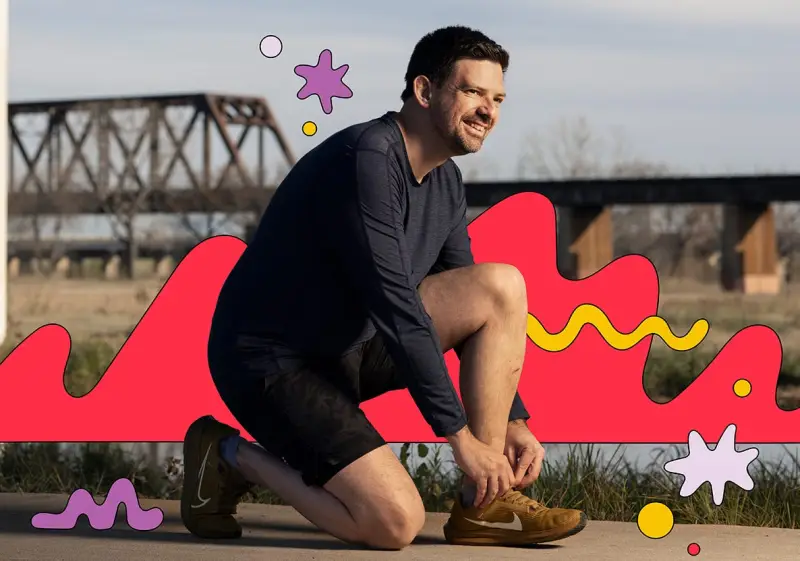
Gordon Garner learned that distinction after a long training run. At the time, the 38-year-old software development manager was preparing for his first marathon. He had completed a 20-mile run at his planned marathon pace, stopping to drink every six miles. After returning home, he felt an urgent need to urinate but could produce only a few drops. The pain became severe enough that he went to an emergency department, where clinicians used a catheter to empty his bladder. They didn’t identify the cause before he left.
The same problem returned during a later training run. Garner stopped at mile 12 to use a restroom but couldn’t urinate, continued for six more miles, and then abandoned the run. After multiple practitioner visits, two incorrect diagnoses, and three prescriptions that didn’t resolve the issue, a physical therapist identified a hypertonic pelvic floor: Garner’s pelvic floor muscles were staying contracted instead of relaxing.
For years, public discussion of pelvic floor problems has often centered on strengthening weak muscles with Kegel exercises. Strengthening may help some people, but it won’t address every cause. If muscles are already overactive or have trouble releasing, adding more contractions may not fit the problem. Pelvic floor therapy may instead focus on relaxation, coordination, breathing, strength, or a combination chosen after an assessment.
Nor does a strong pelvic floor rule out leakage. A 2021 meta-analysis published in Cureus Medical Journal concluded that urinary incontinence can occur even when pelvic floor muscles are strong. Some young female runners who haven’t given birth experience leakage, too. Wiebe also pointed to research finding similar pelvic floor activation in runners who did and didn’t report incontinence, suggesting muscle activity alone cannot explain every case.
Endurance may help explain why symptoms occur late in a run. Wiebe describes a runner who remains dry through everyday activities but leaks near the end of a 45-minute run. The muscles may be strong enough to function well for much of the effort but lack the endurance to meet its full duration. A shorter run might not bring on the same symptom. That pattern is one example, not a way to diagnose the cause at home.

Pain elsewhere may be part of the picture
Elite runner Colleen Quigley spent five years seeking help for recurring left foot injuries and pain in her lower back and hip that eventually limited her ability to train at a high level. She saw more than 50 practitioners, including travelling to Germany for back injections. One practitioner later assessed her pelvis and showed her a tongue stretch aimed at relieving jaw tension. Afterward, muscle testing no longer showed the pelvic issues he had identified.
Wiebe says tension in the jaw and pelvic floor may be related. Quigley incorporated the stretch into her warmup, and a video of her demonstrating it drew more than 42,000 likes on Instagram. She has said the change helped resolve some symptoms, though it didn’t address all her injuries. Her experience is a personal example, not evidence that jaw tension causes pelvic floor problems or that a tongue stretch will help other runners.
Pelvic floor dysfunction can be missed when care focuses only on the place that hurts. In a Canadian study of women who went to an orthopedic clinic with lower back and pelvic pain, researchers found underlying pelvic floor muscle dysfunction in 95 percent of participants. That finding applies to the women screened in that study; it doesn’t mean that 95 percent of everyone with back or pelvic pain has the same condition.
Deep hip stability muscles are connected with pelvic floor function, according to Sara Reardon, a board-certified pelvic floor physical therapist. She notes that some people with deep hip pain or high hamstring strain may have a pelvic floor contribution. A careful assessment can help determine whether that connection is relevant in an individual case.
Assessment should match the person and their symptoms
Experts are beginning to recognize that people with similar symptoms may have different underlying patterns and may respond to different approaches. Breathing and movement habits are among the factors clinicians may explore. For example, someone who habitually braces their abdomen or holds their breath may have pelvic floor muscles that stay more active than needed. If those muscles already struggle to relax, strengthening alone may not address the issue.

Pelvic floor health remains under-researched, according to Wiebe. The subject has often been treated as primarily a women’s or postpartum concern, leaving gaps in understanding of how pelvic floor problems affect men. Pregnancy and childbirth can place particular demands on the pelvic floor, while Garner’s experience illustrates that people who haven’t been pregnant can also develop dysfunction.
There are also practical barriers to care. Stigma can make it difficult to describe symptoms, and a general clinician may not have specialized experience with pelvic health or sports. Liz, Garner, and Quigley each had to consult multiple practitioners before finding someone who connected their symptoms with pelvic floor function. That doesn’t mean every unexplained running problem comes from the pelvic floor; it does make persistent or disruptive symptoms worth discussing.
A pelvic floor physical therapist can assess whether the muscles are weak, overactive, poorly coordinated, lacking endurance, or working in a different pattern. A runner’s history, symptoms, breathing, movement, and activity demands can all provide useful context. People considering therapy may look for a clinician with both pelvic health and sports medicine experience; postpartum runners or male runners may prefer someone experienced with those needs. The American Physical Therapy Association’s provider locator can help identify pelvic health physical therapists.
Some visits may be available remotely, depending on the symptoms and the assessment required. Pagliano says telehealth can be useful when a clinician can identify a likely cause through careful questions. Sharing when symptoms occur, relevant birth history, and childhood bedwetting history may help a clinician understand the pattern. Some care may still call for an in-person visit.
Exercise choices depend on what the muscles need
Home exercises are sometimes discussed as ways to practice pelvic floor contraction or relaxation, but they aren’t interchangeable. Before adding Kegels, particularly when leakage or other pelvic floor symptoms are present, Nora Arnold, a pelvic health physical therapist, advises checking with a pelvic floor therapist to find out whether they fit the person’s needs. Kegels are not appropriate for everyone.
When a clinician recommends contractions, Arnold suggests first learning the movement while lying down, then practising in sitting and standing if appropriate. The action is often described as gently drawing the pelvic floor inward and upward, as if holding back gas, while continuing to breathe. Releasing fully between contractions is part of the exercise. The number and length of repetitions are best tailored by a physical therapist; the source material offers three sets of ten contractions held for ten seconds as a possible starting point, not a universal prescription.
Breathing practice can help people learn coordination between the diaphragm and pelvic floor. Arnold describes slow abdominal breathing in a comfortable position, such as lying on the back, a supported squat, or a reclined position. As the diaphragm moves with an inhale, the pelvic floor can lengthen and relax; an exhale provides a chance to notice how the muscles respond. A therapist can help determine whether this kind of practice suits a person’s symptoms and how to adapt it.
An at-home check described by Lauren Garges, a pelvic rehabilitation director, involves sitting on a large stability ball or a rolled towel and noticing the area between the genitals and anus. The person then tries to gently lift the pelvic floor and consciously release it. Difficulty sensing a release may suggest tension, while difficulty contracting may suggest weakness. This is only a rough self-observation, not a diagnostic test: it cannot establish what’s causing symptoms or replace an assessment by a qualified clinician.
Returning to running can take different forms
After finding a therapist, Garner reduced his running for several weeks and worked on stretching and breath-control exercises. In 2023, he ran 40 miles over 24 hours to mark his 40th birthday and reported no recurrence of the problem. Liz worked with a therapist on strength training, pelvic floor coordination, and noticing her body’s signals. Twenty months after giving birth, she completed her ninth marathon without leakage during the race.
Those outcomes show that running can remain possible for some people after pelvic floor symptoms, but they don’t predict any one runner’s recovery. The pace and type of care depend on the cause and the person. For readers dealing with leakage, difficulty urinating or passing stool, pelvic pain, or a feeling of prolapse, a conversation with a doctor or pelvic floor physical therapist can help clarify what’s happening and whether a return-to-running plan needs to change.
The useful shift is to treat pelvic floor function as more than a question of squeezing harder. These muscles have to respond to impact, coordinate with the rest of the body, and release when needed. Understanding which part of that work is difficult can make the next conversation with a clinician more focused—and help runners make sense of symptoms that otherwise might seem unrelated.


