- Subject
- Fitness & Workout
- Filed
- Source
- Michael Brown
- Loans
- 636
QL Pain in Runners: Causes, Exercises and When to Seek Help
The QL helps steady the trunk and pelvis while running. Learn what can irritate it, which movements may help, and when to seek a physical therapist.

Lower back or hip discomfort during a run can involve the quadratus lumborum, or QL, a deep muscle connecting the lower spine and the back of the pelvis. It helps bend and rotate the trunk, supports the pelvis as each leg moves, and assists with inhalation. Physical therapists Nicole Haas and Spencer Agnew describe several ways the muscle can become overloaded, along with mobility and strengthening exercises that may help runners manage symptoms.
The practical point is that a sore QL isn’t necessarily a short or tight muscle. It may be working harder because other parts of the body aren’t sharing the load well. That distinction matters: stretching may feel helpful for some people, while others may need to focus on movement control and strength—or get assessed by a physical therapist.

Why the QL can become irritated
Tight hip flexors are one possible contributor. The psoas, a large hip flexor that connects the lower back to the front of the hip, can pull the pelvis forward when shortened. That position increases the arch in the lower back and may place extra tension on the QL, which attaches to some of the same lower vertebrae.

Glute weakness can also change how force travels through the legs and trunk. If the glutes don’t adequately control the leg as it lands, the knee may move inward and the opposite side of the pelvis may drop. The trunk can then bend and rotate to compensate, asking more of the QL over repeated strides. Downhill running may add stress when it increases the arch in the lower back.

Limited movement in the upper back, shoulders, hips or middle back can shift work toward the QL as well. Pain or injury in those areas may restrict movement, leaving the QL to compensate. Haas’s explanation is useful here: sometimes the muscle feels tight because it’s overworked and irritated, rather than because it needs more stretching.

Possible effects on running
If the QL and nearby hip flexors are restricted, the pelvis may sit in a forward-tilted position. That can limit how high the knee lifts during a stride and make it harder to drive forward. A runner may also adopt a more arched-back posture, which can add to lower back discomfort.

The QL’s role in breathing is another reason symptoms may affect a run. When it’s tense, taking a deep or comfortable breath may feel harder. These effects can vary from person to person, and pain in this region can have causes other than the QL. The exercises below are general options, not a way to confirm what’s causing symptoms.
A three-part routine for discomfort
Agnew describes a sequence that combines soft-tissue pressure, pelvic control and strength work, followed by stretching. The suggested frequency depends on how much discomfort a runner has: the sequence may be done daily when symptoms significantly limit running, or two to three times weekly for milder pain. On running days, he suggests doing the release, pelvic tilts and hip hikes before the run, then completing the other exercises afterward.
1. Gentle pressure with a ball
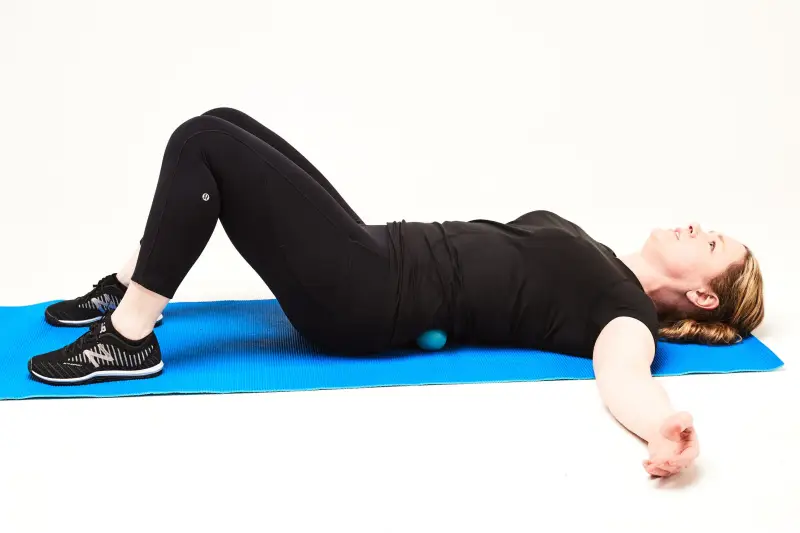
Lie on your back or stand near a wall, and place a softball, lacrosse ball or massage ball against a tight-feeling area of the lower back. Apply pressure for about 30 seconds while breathing steadily, then move the ball to another spot. Spend about two to five minutes in total.
The pressure can feel uncomfortable, but it should remain tolerable for the full hold. Reduce how much body weight presses into the ball if the sensation is too intense. This approach is meant to make sensitive soft tissue feel less reactive; pressing harder isn’t the goal.
2. Pelvic control and QL strength
Pelvic tilts: Lie on your back with knees bent and feet flat. Slowly alternate between arching the lower back and pressing it toward the floor. Repeat 30 times, then find a comfortable middle position with the pelvis neither tipped far forward nor tucked far under. This helps build awareness of pelvic movement.
Hip hikes: Stand with one foot on a step and the other leg hanging freely. Keep the standing knee straight as you lower the free side of the pelvis, then bring it back to level. Do 12 to 15 repetitions, switch sides and complete two sets. Use a stable step and hold support if needed for balance.

Weighted side bends: Stand upright holding a kettlebell, dumbbell or other manageable weight in one hand. Bend sideways away from the weight, then return to an upright position while keeping the trunk steady. Avoid twisting or leaning backward. Do 12 to 15 repetitions on each side for two sets, choosing a load that allows controlled movement.
Suitcase march: Hold a weight in one hand and march slowly, raising each thigh toward parallel with the floor. Keep the pelvis steady as the legs alternate. March in place or move forward if space allows. Complete 12 repetitions per side and two sets. This challenges trunk stability as the legs move.
3. Half-kneeling side stretch
Kneel with one foot planted in front and the other knee on the floor, both knees bent. Raise the arm on the kneeling side overhead and lean gently toward the planted foot. Keep the pelvis in a neutral position; the stretch should be mild and felt along the front of the hip and side of the trunk. Hold for 30 to 60 seconds, switch sides, and repeat until you’ve accumulated about two minutes per side.
Other mobility options
Several gentle movements can help mobilize the lower back and sides of the trunk. They can be tried before or after a run, or at other times. Haas advises stopping a stretch if pain increases afterward or returns soon after; in that situation, stretching may not be the right approach.
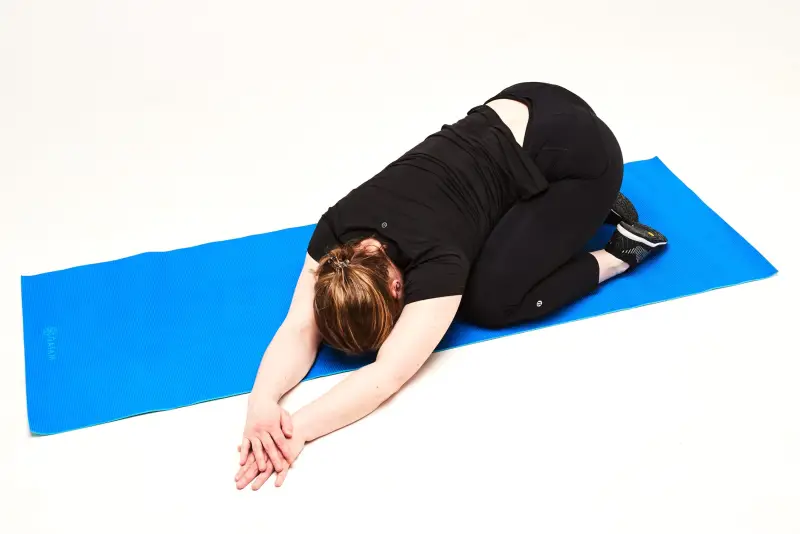
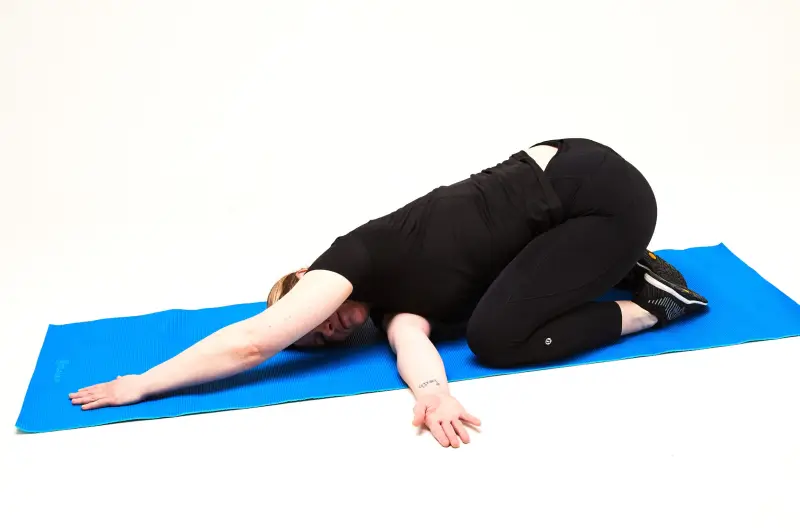
Child’s-pose side reach: Start on hands and knees with the feet together. Keeping the back comfortable, move the hips toward the heels and reach both hands forward. Then walk the hands to one side and hold for 10 to 15 seconds to stretch the opposite side of the lower back. Switch sides.
Thread the needle on hands and knees: From the same position, press one hand into the floor and reach the other arm beneath the opposite armpit. Pause briefly where you feel a gentle stretch, return to the starting position and repeat several times. Switch arms to work the other side.
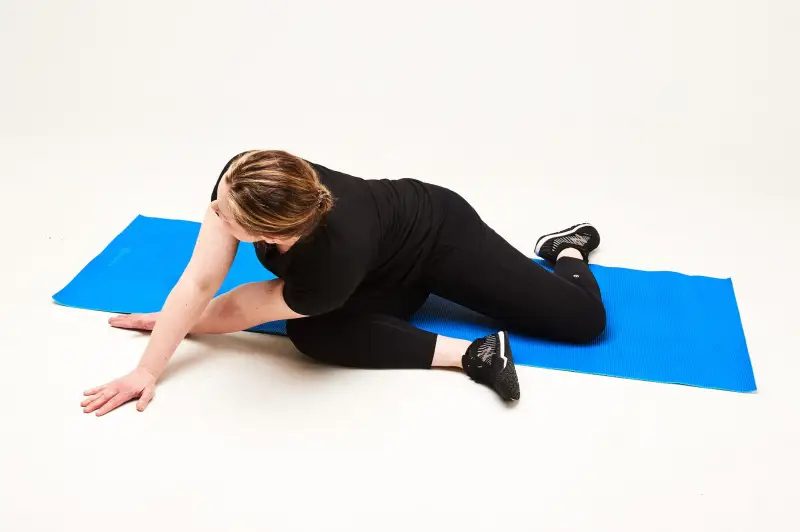
Seated thread the needle: Sit with both knees bent, one shin in front and the other angled out to the side. Place one hand on the floor for support, then reach the opposite arm beneath the supporting arm. Pause for several seconds, return upright and repeat a few times before switching sides.
Build support with glute and core work
Agnew also recommends exercises that train the glutes and trunk to control the pelvis during movements that resemble running. His starting suggestion is one set daily while learning the patterns. If soreness develops, take a day off. After about six weeks, these exercises can be done two to three times weekly as part of a strength routine, if they remain comfortable.
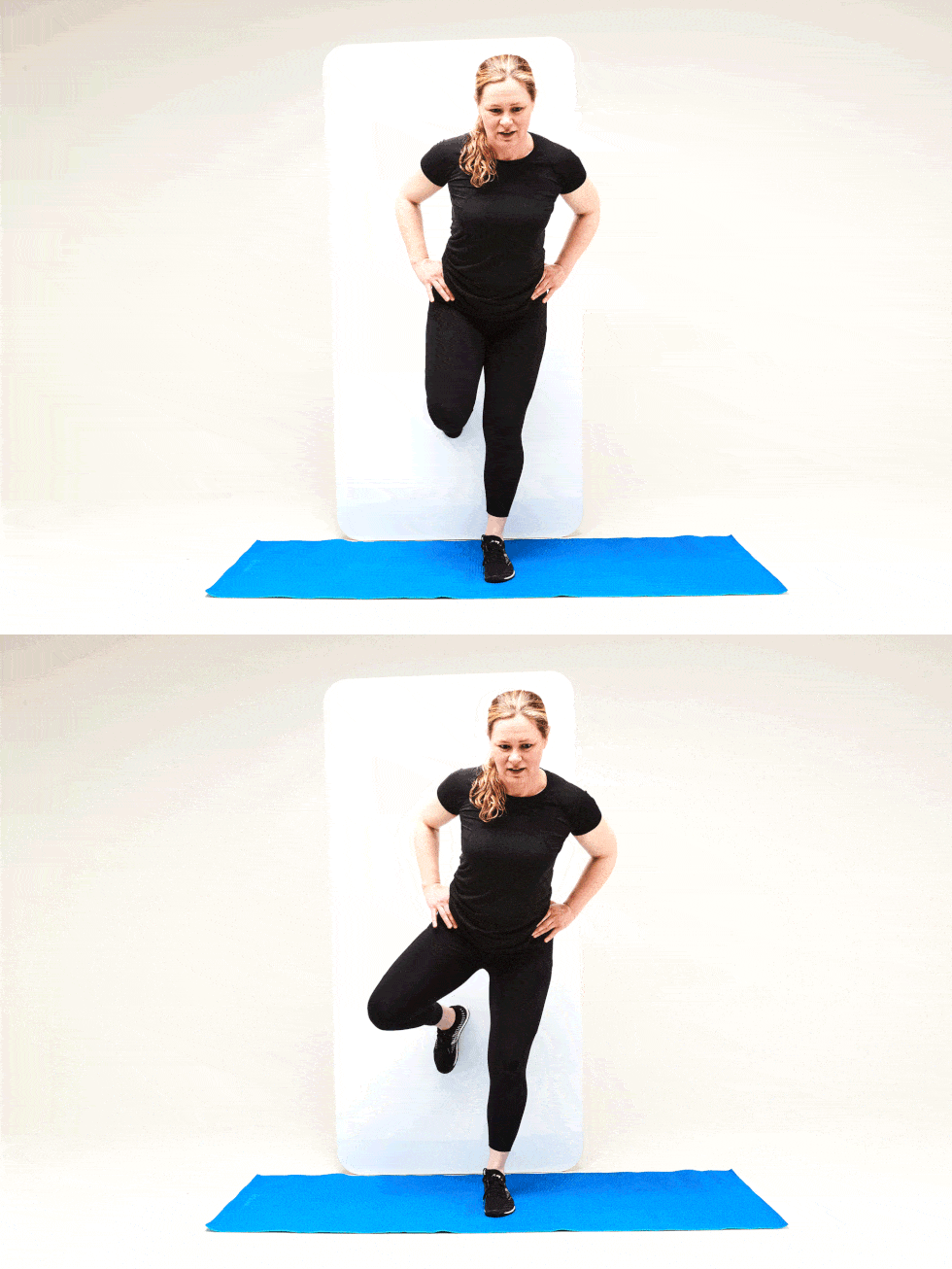
Standing clamshell: Stand facing away from a wall, balance on one leg, and rest the bent knee of the other leg against the wall behind you. Hinge forward slightly and use a chair or other stable support if needed. Rotate the lifted leg outward while keeping the standing knee from collapsing inward and the pelvis level. Stop when you can no longer maintain control; aim for at least six repetitions.
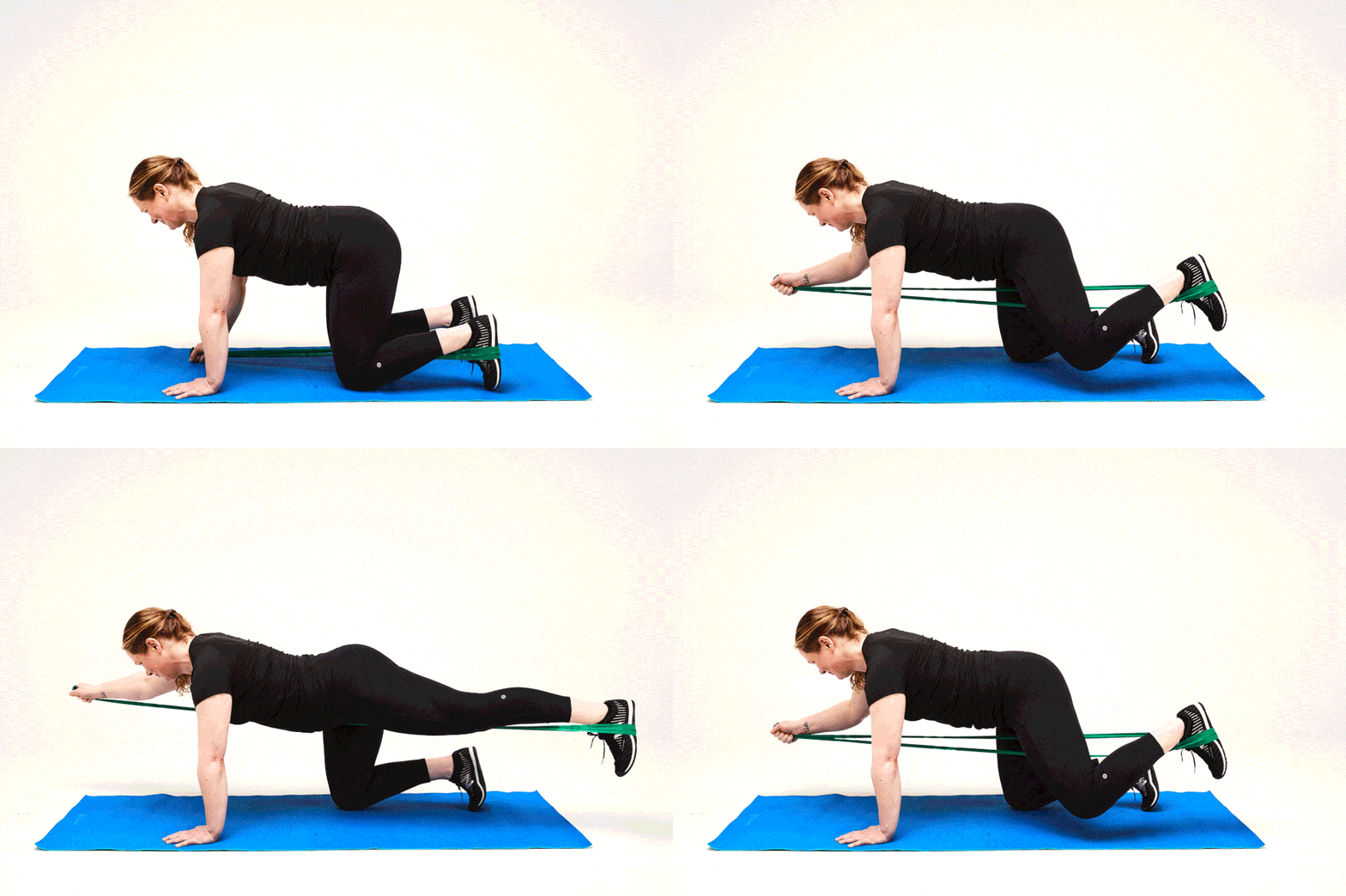
Banded bird dog: Begin on hands and knees. Loop a long resistance band around one foot and hold the other end in the opposite hand, so the band crosses beneath the body. Slowly extend that arm forward and the opposite leg behind you while keeping the back flat and hips and shoulders facing the floor. Return to the starting position, repeat with good control for at least six repetitions, then switch sides.
When to get assessed
A physical therapist can help determine whether the QL is involved and identify movement or strength issues that may be contributing. Haas suggests arranging an assessment if the stretches and strengthening exercises haven’t improved symptoms after about two weeks. Agnew recommends seeking help sooner when pain is limiting running. A clinician can help tailor activity and exercises to the person’s symptoms and overall health.
For runners, the useful takeaway is to pay attention to how the body responds. Gentle mobility may help when stiffness is part of the problem, while controlled strength and pelvic stability may matter more when the QL is compensating for other areas. Worsening pain or symptoms that interfere with running are good reasons to ask a physical therapist for guidance.


