- Subject
- Nutrition
- Filed
- Source
- Shelly Fan
- Loans
- 587
AI Lab Completes DNA Experiments With Limited Human Help
AutoDNA completed DNA synthesis and sequencing tasks with expert level precision, while hardware faults, restocking and safety needs still require human oversight.
From a written prompt to a working DNA experiment
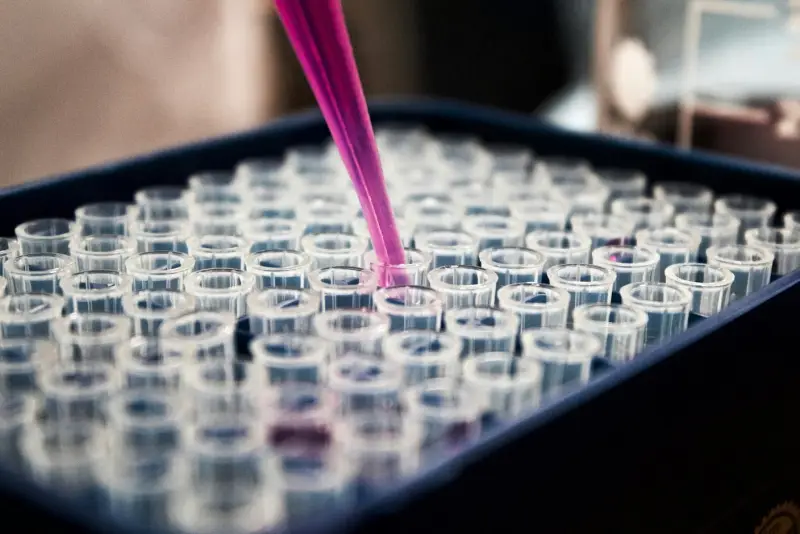
AutoDNA brings AI agents and robotic equipment together to carry out molecular biology experiments from plain language instructions. In one demonstration, the system was asked to encode the phrase “Intelligence is the ability to adapt to change” in DNA. It planned the procedure, generated code for lab instruments and directed robots through DNA synthesis and sequencing.
The end to end task took about 200 hours. The system completed it with precision comparable to expert scientists, but people still had to replenish supplies and empty waste. The work, from a team at Shanghai Jiao Tong University, points to a way of automating repetitive bench tasks while researchers spend more time interpreting results and developing hypotheses.
That distinction matters. AI has been useful for scientific work that happens on computers, but handling liquids, chemicals and biological samples adds physical constraints. A pipetting mistake or a missed step can spoil a long experiment. AutoDNA was designed around AI controlled workflows from the start, rather than adapting a lab built for people. Its robotic arms can operate more than 20 types of common laboratory equipment, and the system can correct some small problems during a run.
What the demonstrations showed
In one test, AutoDNA optimized polymerase chain reaction, or PCR, a method for making many copies of a DNA segment. PCR conditions depend on the sequence being copied, so researchers often adjust settings for each target. AutoDNA changed reaction parameters across multiple rounds and reached a yield of nearly 98 percent, similar to results from human experts.
In another case, the system examined a colorectal cancer sample for mutations. It identified a candidate mutation in KRAS, a gene associated with cancer when altered, then designed and synthesized short DNA primers to check the finding through sequencing. This was a laboratory demonstration of a candidate mutation, not a clinical diagnosis or a test of patient outcomes.
The team also tested whether AutoDNA could encode and recover a message using DNA’s four-letter code. That run involved 11,382 operations over roughly eight days. All 78 DNA strands needed for the message were synthesized and decoded, despite a few missing DNA letters. When supplies ran low, the system paused and alerted a technician to replenish reagents and disposable items such as pipette tips and tubes.
One smaller example hinted at the value of planning beyond a written protocol. In a viral DNA detection task, an agent told the robot to cap test tubes to limit evaporation, even though the instruction had not been stated explicitly. That kind of practical judgment can protect an experiment, but the demonstration does not establish that the system will reliably anticipate every detail in unfamiliar settings.
Part of a wider shift toward automated research
AutoDNA extends a broader effort to automate parts of scientific discovery. AI systems such as Virtual Lab, Robin and Google’s Co-Scientist organize research tasks and help develop experimental ideas, though much of that work remains computational or involves human feedback.
Other projects have put AI closer to the bench. SAMPLE, developed at the University of Wisconsin–Madison, uses an AI model to suggest protein changes, then directs robots to make and test them. Over six months, it produced a more heat tolerant enzyme, a process described as taking about half the time human scientists would need. Other automated labs have used protein language models to guide experiments that increase enzyme activity. OpenAI and Ginkgo Bioworks have also demonstrated a GPT-5 powered system for optimizing protein synthesis with limited human assistance.
Connecting different instruments remains a separate technical challenge. Lab equipment often uses different software and control languages. Frameworks such as Anthropic’s Model Hardware Standard aim to let AI agents operate devices from microscopes to robotic arms within a coordinated workflow. AutoDNA’s contribution is to show how those pieces can be organized around a molecular biology task, rather than simply controlling individual instruments.
Human oversight remains part of the process
AutoDNA still had hardware problems: it logged 14 errors across the experiments, and six required a person to intervene. Restocking also remained manual. Though easy to overlook, supply management and waste handling take time and are part of keeping a lab running. The system has not yet demonstrated that it can manage delicate work involving living cells or animals.
There are safety questions, too. AI agents may not know how to handle unfamiliar or costly equipment safely. A digital twin, or virtual version of the lab, could let a system rehearse a procedure and catch some mistakes before it runs an experiment in the physical lab. That approach would need to be tested; a simulation cannot guarantee that equipment or samples will behave exactly as expected.
Researchers also need safeguards around what experiments an automated lab can design and run. DNA synthesis capabilities raise concerns if systems can produce sequences associated with harmful proteins. Screening designs, limiting access and keeping records of who authorized experiments are among the measures that could help manage that risk.
For now, AutoDNA is evidence that AI can narrow the distance between proposing an experiment and carrying it out. Its results are promising demonstrations, not proof that a lab can run unattended. The next measure of progress will be whether these systems can handle a wider range of experiments reliably while keeping people involved in oversight, maintenance and decisions about what work is appropriate.


